
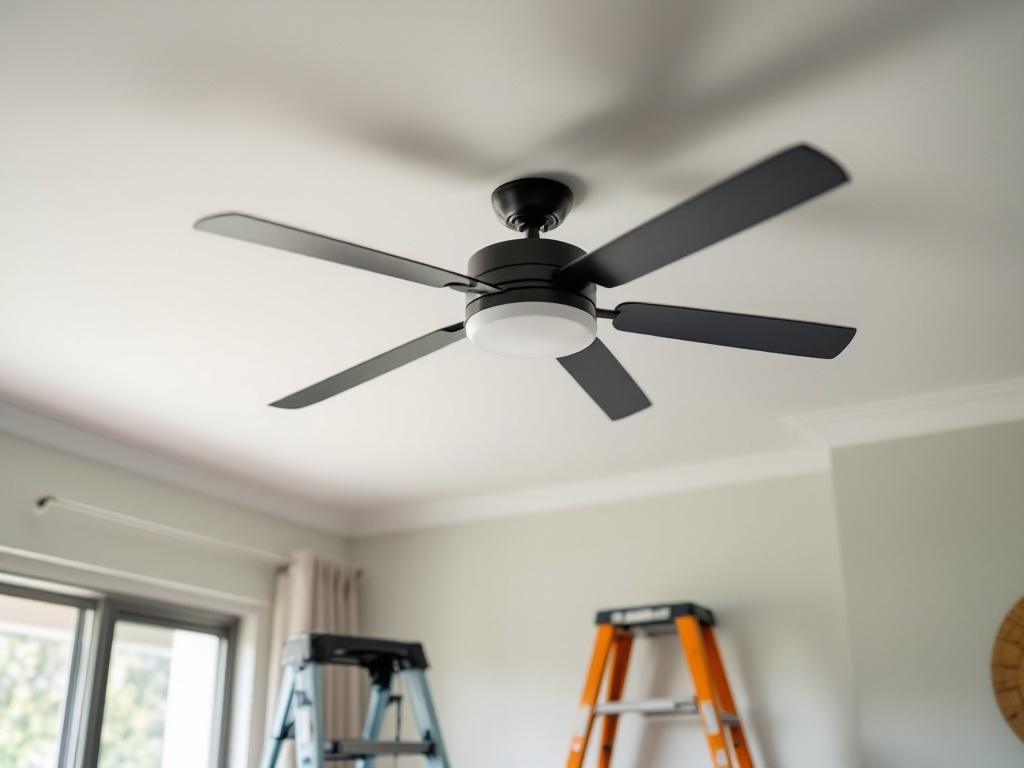
Why Your Ceiling Fan Wobbles or Hums (And Whether It's a DIY Fix or Electrical Fault)
Some ceiling fan problems you can fix in ten minutes — others are electrical faults that need a licensed electrician.
What actually causes a ceiling fan to wobble?
A wobbling ceiling fan is almost always caused by one of three things: unbalanced blades, a loose mounting bracket, or a bent blade arm. These are mechanical issues, not electrical ones, and most homeowners can diagnose them safely with the fan switched off at the wall.
Blade imbalance is the most common culprit. Over time, blades warp slightly due to humidity and heat, or dust builds up unevenly and shifts the centre of gravity. A blade balancing kit — available at any hardware store — adds small adhesive weights to the lighter blade until the fan runs true. This fix costs next to nothing and takes about fifteen minutes.
A loose mounting bracket is the second cause and the one that needs more attention. If the fan feels like it's swaying side to side rather than vibrating, get up on a ladder, switch off the power at the switchboard, and check that the canopy screws and the bracket bolts are tight. If the bracket itself is cracked or the ceiling mount has worked loose from the joist, stop there — that's a job for a professional.
What causes a ceiling fan to hum — and is it dangerous?
A humming ceiling fan points to an electrical issue more often than a mechanical one. The most common sources are a faulty capacitor, a dimmer switch being used on a fan circuit, or voltage fluctuations in the wiring — none of which are DIY territory.
Dimmer switches are a frequent offender. Ceiling fans are inductive loads, not resistive ones, so running them through a standard dimmer creates electrical noise that shows up as a persistent hum. The fix is replacing the dimmer with a proper fan speed controller — straightforward for a licensed electrician, but not a legal DIY task in Australia since it involves working inside the switchboard or wall wiring.
A failing capacitor causes the motor to struggle, producing both a hum and reduced speed. Capacitors are inexpensive parts, but accessing them requires removing the fan housing and working with internal wiring. If the hum is accompanied by a burning smell, warmth at the ceiling rose, or flickering lights elsewhere in the room, turn the fan off at the switchboard immediately and call an electrician. Those signs point to a wiring fault, not a worn component.
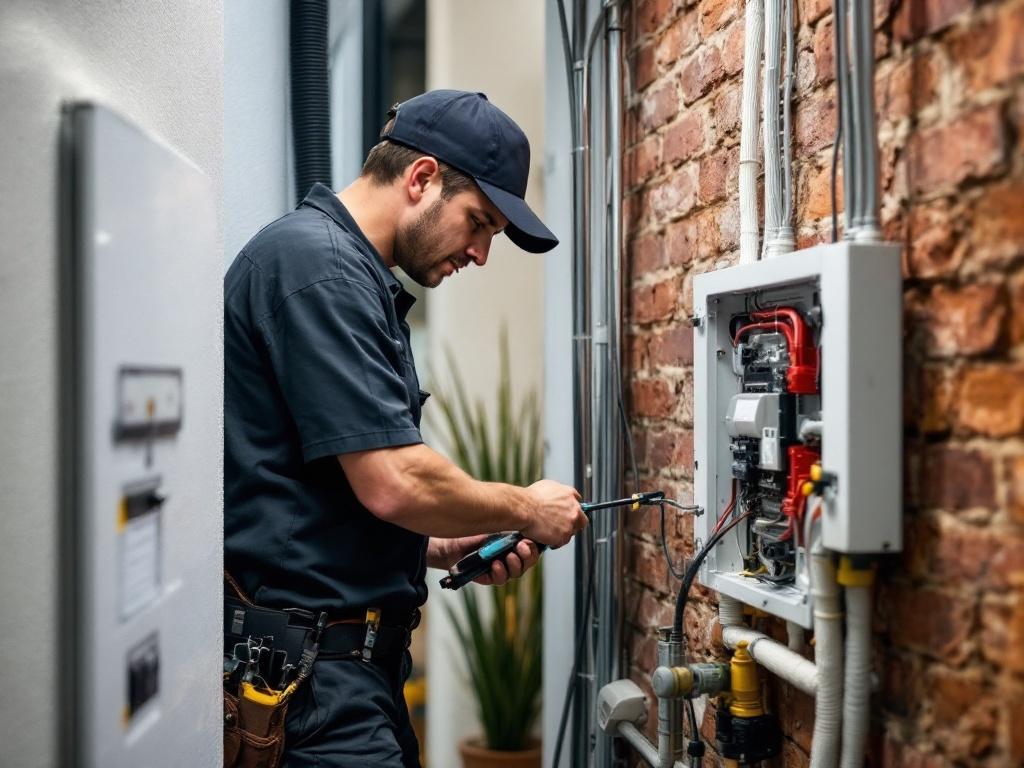
DIY fix vs. call an electrician: a direct comparison
Here is a clear side-by-side breakdown so you can decide quickly without second-guessing.
Fix it yourself if the problem is blade imbalance (fan wobbles, blades visible uneven), loose canopy screws (minor rattle at the ceiling), or dust build-up on blades (wobble started gradually). These involve no electrical contact, just a ladder, a screwdriver, and a balancing kit. They suit confident homeowners who are comfortable working at height with the power off at the wall.
Call a licensed electrician if the fan hums at any speed, the hum is tied to a dimmer switch, the bracket or ceiling rose is cracked or hot to touch, the fan trips a circuit breaker, lights flicker when the fan runs, or you can smell burning plastic near the fitting. These are electrical faults. In New South Wales, electrical work beyond changing a lightbulb or a standard plug-in appliance must be done by a licensed electrician — attempting it yourself voids your home insurance and creates real fire and electrocution risk. Exell Electrical Services covers Kirrawee, Sutherland, Gymea and the wider Sutherland Shire for exactly these call-outs.
How to diagnose your ceiling fan problem in under five minutes
Start with the fan off at the wall — not just the remote, but the wall switch. Stand under it and look at the blades from below. If one sits noticeably higher or lower than the others, a bent blade arm is your likely culprit. Gently bend it back by hand and retest.
Turn the fan on at its lowest speed and watch the ceiling rose, not the blades. Movement at the rose means the mounting is loose or the ceiling outlet box is not rated for a fan load — a common issue in older homes in Caringbah and Miranda where fans were retrofitted into light fittings not designed to bear the weight and torque. That needs an electrician.
Finally, listen carefully. A rhythmic click in time with the blade rotation is usually a loose screw on the blade bracket. A constant electrical hum that does not change with speed is a capacitor or wiring issue. A hum that changes with the speed controller is almost certainly a dimmer incompatibility. The rhythm of the noise tells you whether the problem is spinning (mechanical) or always-on (electrical).
When should you just replace the ceiling fan entirely?
Replacing the fan makes more sense than repairing it when the motor is more than ten to fifteen years old, the humming persists after a capacitor replacement, or the cost of a service call approaches the price of a new unit. Modern DC-motor fans are significantly quieter, more energy-efficient, and often come with compatible speed controllers that eliminate hum at the source.
If you're in Cronulla, Menai, or Engadine and considering a full replacement, a licensed electrician can swap out an old fan and install a new one in under an hour. It is also the right moment to check that the ceiling outlet box is fan-rated, the wiring is in good condition, and there are no underlying issues at the switchboard. Combining a fan replacement with an electrical safety inspection adds very little time and gives you a clear picture of the home's overall wiring health.
Do not attempt to remove and reinstall a ceiling fan yourself in NSW. The connection at the ceiling involves fixed wiring — defined as electrical work under the Electricity (Consumer Safety) Act 2004 — and must be carried out by a licensed electrician who can issue a certificate of compliance.
Frequently asked questions
What our customers say
"Exell Electrical Services PTY LTD were fantastic from start to finish — turned up on time, explained everything clearly and left the place spotless. Highly recommend to anyone in Kirrawee."
"Really happy with the electrician here in Sutherland. Fair price, genuinely professional, and no mess left behind. Will definitely use Exell Electrical Services PTY LTD again."
"Fast, friendly and reliable — Exell Electrical Services PTY LTD sorted everything the same day and kept me updated the whole way through. Great local service in Gymea."
Got a ceiling fan that wobbles, hums, or trips the power?
Exell Electrical Services provides prompt ceiling fan repairs, replacements, and electrical safety inspections across Kirrawee, Sutherland, Cronulla, and the Sutherland Shire — get in touch for a no-obligation quote.